
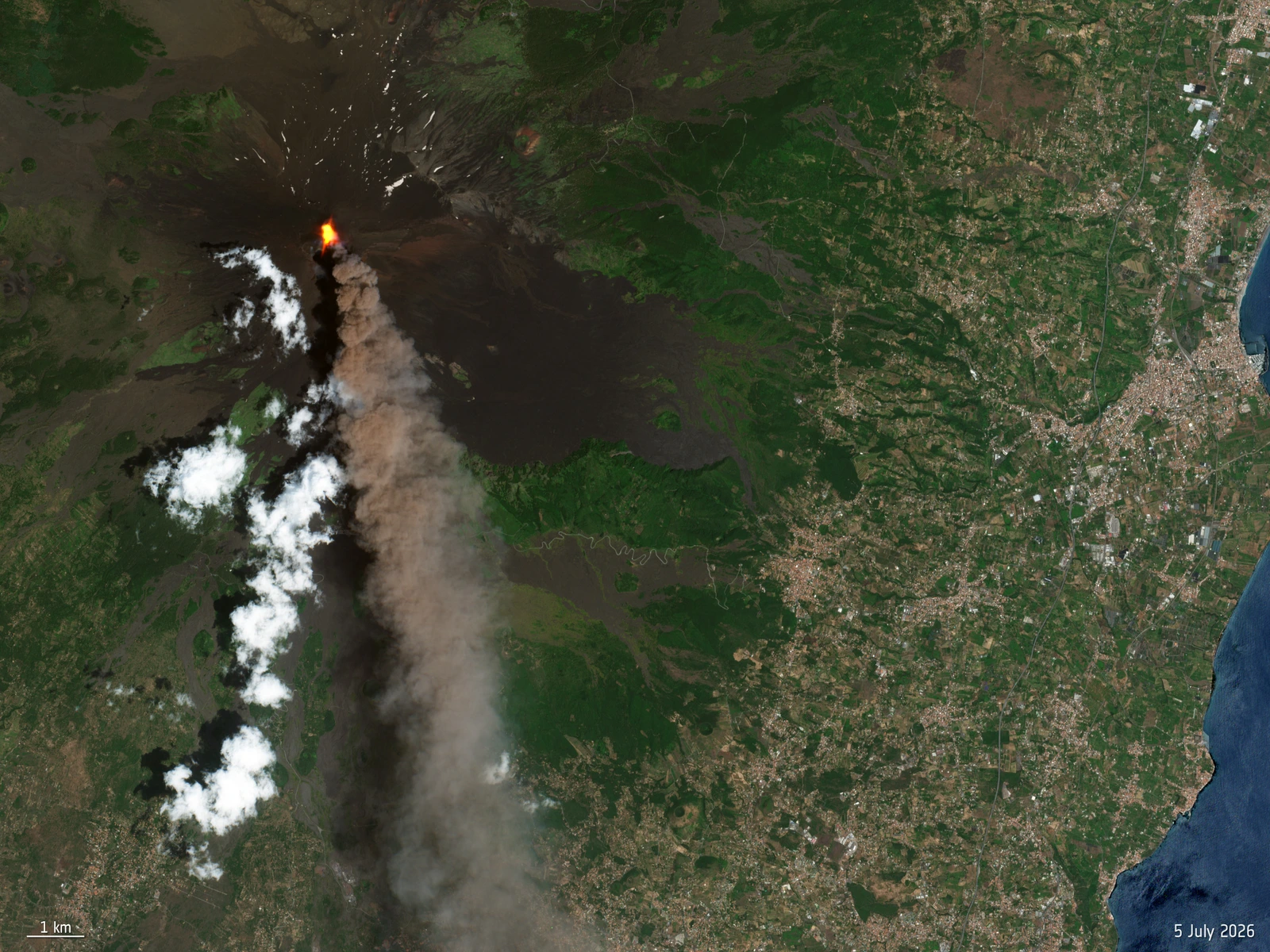
Volcanic ash from Mount Etna has caused major disruption at Catania Airport during the peak summer travel period, with hundreds of flights cancelled or rerouted and thousands of passengers affected.
The latest eruptive phase began on 6 August 2026. On 14 August, airport operator SAC extended the suspension of flights until 15:00 local time on Saturday, 15 August. Because volcanic activity, ash movement and aviation restrictions can change quickly, passengers should check their flight directly with their airline and Catania Airport before travelling to the terminal.
Mount Etna disruption: what is happening at Catania Airport?
Reuters reported that more than one-third of almost 2,000 flights scheduled at Catania between 6 and 12 August were cancelled, while about 630 flights were rerouted. The disruption has put pressure on alternative airports in Sicily during one of the busiest travel periods of the year.
The effects have not been limited to Catania. Ash drifting south across the Mediterranean also disrupted flights serving Malta earlier in the week.
Volcanic ash is a serious aviation hazard because it can affect aircraft engines and other systems. Operational restrictions can therefore be introduced, extended or changed at short notice even when conditions at the airport itself appear relatively calm.
What should affected passengers do now?
If you are due to fly to or from Catania, do not rely only on the original timetable. Check your flight status with the operating airline before leaving for the airport.
- Keep your booking confirmation and boarding pass.
- Save airline emails, texts, app notifications and cancellation or delay notices.
- Keep evidence of any rerouting, rebooking, refund or voucher offered.
- Ask the airline what assistance and alternative transport it is providing.
- Keep receipts for necessary meals, accommodation and transport you have to pay for yourself.
- If your flight is diverted, record the airport where you actually arrived and what onward transport the airline offered.
Before arranging expensive alternative transport independently, contact the airline where reasonably possible and keep a record of the response.
Does a Mount Etna cancellation automatically mean €250–€600 compensation?
No. Fixed compensation and the airline’s other obligations are separate questions.
Under the EU passenger-rights framework currently in force, an airline may not have to pay fixed compensation when it can prove that a cancellation or long delay was caused by extraordinary circumstances that could not have been avoided even if all reasonable measures had been taken.
A volcanic eruption, dangerous volcanic ash or related airspace restrictions can involve circumstances outside an airline’s control. However, an individual claim still depends on the actual cause of that particular flight’s disruption and the airline’s response. A general report about Mount Etna does not by itself determine the outcome of every affected flight.
For the broader legal distinction, see Airdelay’s guide to extraordinary circumstances.
Extraordinary circumstances do not automatically remove care rights
This is particularly important for passengers stranded during the Etna disruption. EU passenger-rights guidance distinguishes fixed compensation from the right to assistance.
Depending on the circumstances and waiting time, assistance can include meals and refreshments, hotel accommodation when an overnight stay is necessary, and transport between the airport and accommodation.
If required assistance is not offered and a passenger has to pay personally, the airline should reimburse expenses that are necessary, reasonable and appropriate. Keep all receipts and avoid unnecessary or disproportionate purchases where a reasonable alternative is available.
Airdelay’s new flight delay and cancellation expenses guide explains how meals, hotels, transport and other disruption-related costs should be documented and assessed.
Refund, rerouting and compensation are different rights
When the EU rules apply to a cancelled flight, the airline must generally offer a choice between reimbursement of the ticket and rerouting options under the applicable conditions. Passengers waiting for rerouting may also have rights to care.
These rights should not be confused with fixed financial compensation. An extraordinary event may affect whether compensation is payable while refund, rerouting and care obligations can still remain relevant.
If your flight has been diverted to another airport, keep the original itinerary, details of the actual arrival airport, the airline’s instructions and receipts for any necessary onward transport you had to arrange yourself.
Check your flight before travelling to the airport
Mount Etna is an active volcano and restrictions around Catania can change quickly. Passengers with upcoming flights should continue checking their airline and the airport for current operational information.
The practical priorities are to monitor the flight, preserve airline communications and travel documents, keep receipts for necessary expenses, and distinguish assistance and rerouting rights from any separate claim for fixed compensation.
Sources
- Reuters reporting on Mount Etna and Catania Airport disruption, 10–14 August 2026.
- Catania Airport / SAC operational flight information.
- European Union Your Europe guidance on air passenger rights, cancellations, extraordinary circumstances and assistance.
Last updated: 15 August 2026. Operational conditions can change at short notice. This article provides general passenger-rights information and does not determine eligibility for an individual claim.