
Denied Boarding Compensation
Denied boarding compensation may be available if you were refused boarding even though you had a valid booking, arrived for check-in on time, and did not volunteer to give up your seat. Airdelay helps you check whether an overbooked flight or involuntary denied boarding case may qualify.
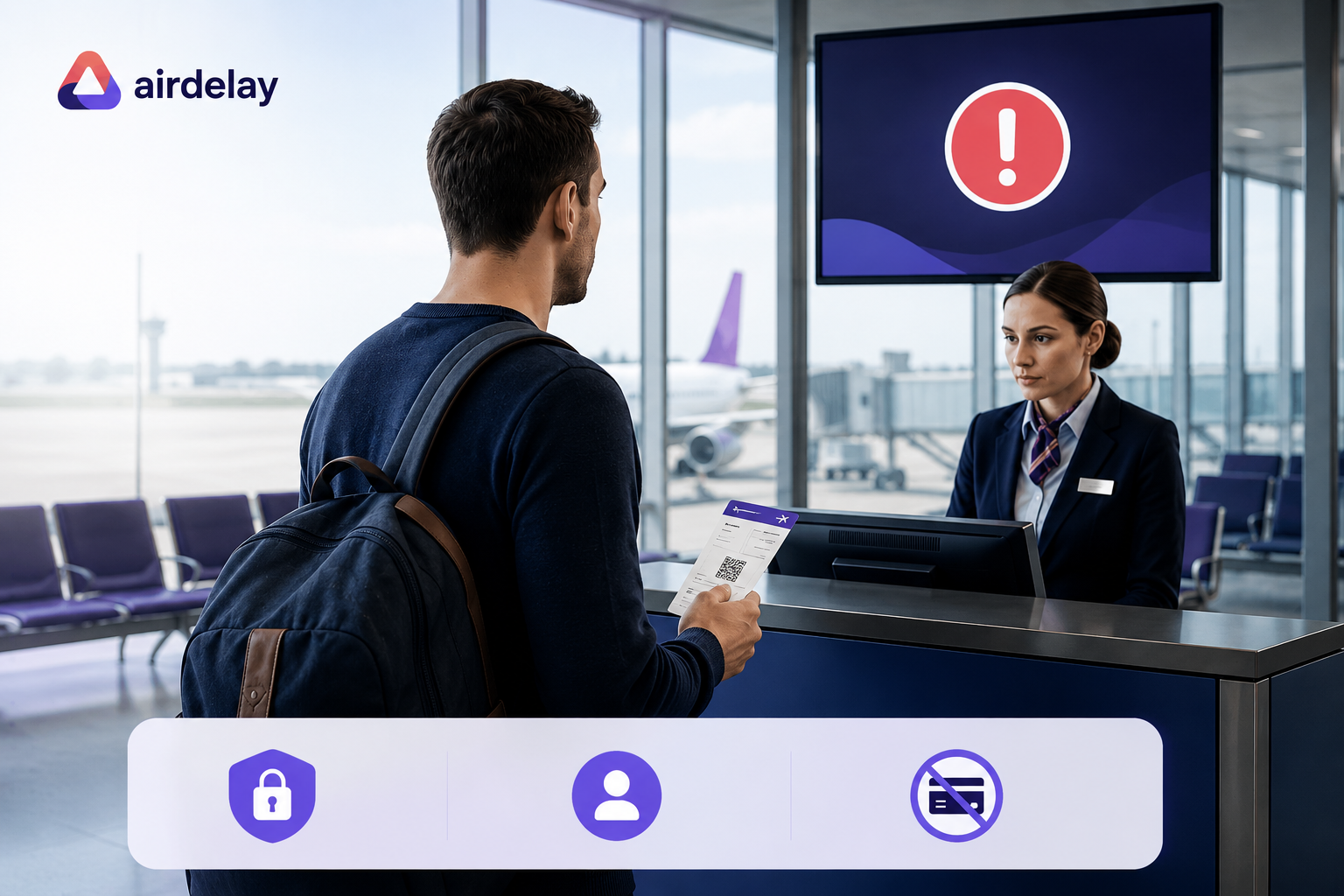
What is denied boarding compensation?
Denied boarding compensation is a fixed payment that may be available under passenger-rights rules when an airline refuses to let you board a flight against your will. This often happens when a flight is overbooked and the airline has sold or allocated more seats than are available.
It is different from meals, hotel accommodation, refunds, rerouting, or vouchers. Those may be part of the airline’s assistance or alternative travel offer, but fixed compensation is a separate question.
When denied boarding may qualify for compensation
A denied boarding claim can depend on the route, airline, passenger-rights system, check-in timing, documents, and whether you voluntarily accepted benefits in exchange for giving up your seat.
You had a valid booking
You usually need to show that you had a confirmed reservation, ticket, booking reference, or boarding pass for the flight.
You arrived on time
Denied boarding compensation usually depends on whether you arrived for check-in and boarding within the airline’s required time limits.
You did not volunteer
If you accepted money, vouchers, miles, upgrades, or another benefit in exchange for giving up your seat, this may be treated differently.
There was no valid refusal reason
Compensation may not apply if boarding was refused for health, safety, security, missing documents, visa issues, or late arrival at the gate.
Voluntary vs involuntary denied boarding
The difference between voluntary and involuntary denied boarding is very important. If the airline asks passengers to give up seats and you agree to do so in exchange for benefits, this is usually treated as voluntary denied boarding.
If you did not agree and the airline refused to let you board anyway, this may be involuntary denied boarding. Involuntary denied boarding is the type of case most closely linked to fixed compensation under EU and UK passenger-rights rules.
- Voluntary denied boarding: you accepted an offer to give up your seat.
- Involuntary denied boarding: the airline refused boarding against your will.
- Common airline offers: cash, vouchers, miles, upgrades, hotel stays, or a later flight.
- Useful evidence: written confirmation showing whether you volunteered or were refused boarding.
Overbooked flight compensation
Overbooking is one of the most common reasons passengers are denied boarding. Airlines may overbook flights because they expect some passengers not to travel. If too many passengers arrive, the airline may ask for volunteers or refuse boarding to some passengers.
If you were bumped from an overbooked flight without your agreement, you may be able to claim overbooked flight compensation. The review can depend on whether you checked in on time, whether you were at the gate on time, what alternative flight was offered, and which passenger-rights rules apply to your route.
Airline asked for volunteers
If you accepted the airline’s offer, the case may be treated as voluntary and compensation rights may be different.
Airline refused boarding
If you did not agree to give up your seat and the airline refused boarding anyway, a denied boarding compensation check may be useful.
How much denied boarding compensation could you get?
Possible denied boarding compensation can depend on the passenger-rights system, route, flight distance, and the alternative travel offered by the airline. Under EU261, common compensation bands are linked to flight distance. Under UK261, fixed compensation amounts are also distance-based and shown in pounds.
For a simple explanation of possible amount bands, see: Flight Compensation Amounts.
What can stop a denied boarding compensation claim?
Not every boarding refusal qualifies for compensation. Airlines may have valid reasons to refuse boarding, and voluntary seat surrender can be treated differently from involuntary denied boarding.
You volunteered
If you accepted benefits in exchange for giving up your seat, this may affect whether fixed denied boarding compensation applies.
You arrived late
If you missed check-in, boarding, or gate deadlines, the airline may argue that you were not eligible to board on time.
Document or visa issues
Missing passports, visas, residence permits, health documents, or other required travel documents may stop compensation.
Health, safety, or security reasons
Airlines may deny boarding for reasonable health, safety, or security grounds. These cases need careful review.
Documents that can help a denied boarding claim
You do not always need every document to start a claim, but clear evidence can make the review easier. For denied boarding, the most useful details often show that you had a valid booking, arrived on time, and did not volunteer to give up your seat.
- Booking confirmation or e-ticket
- Boarding pass, if available
- Flight number and travel date
- Departure and arrival airports
- Photos or screenshots showing gate information or boarding issue messages
- Written confirmation from the airline that boarding was refused
- Any overbooking or denied boarding form given at the airport
- Details of any alternative flight or rerouting offer
- Messages showing whether you accepted or rejected vouchers, cash, miles, or other benefits
- Receipts for meals, hotel, taxi, train, or other disruption-related costs
For a full checklist, see: Documents Needed for a Flight Compensation Claim.
How Airdelay helps with denied boarding compensation
Airdelay helps passengers submit denied boarding details, check whether a claim may be eligible, manage documents, and follow claim updates in one place.
Tell us what happened
Start with your route, airline, flight number, travel date, and whether you volunteered or were refused boarding.
We check eligibility
Airdelay reviews your information against relevant passenger-rights rules and the details you provide.
Send documents if needed
If more information is required, Airdelay can ask for it through a secure claim page instead of asking you to start again.
Track your claim
If you create an account, you can view submitted claims and follow status updates from your dashboard.
Official passenger-rights resources
Passenger-rights rules can change, and eligibility can depend on the exact facts of the flight. These official resources may help you understand the wider legal background for denied boarding and overbooked flight cases.
Denied boarding compensation FAQ
Can I claim denied boarding compensation?
Is overbooking the same as denied boarding?
What if I accepted a voucher or cash to take another flight?
What if I was late to the gate?
Can the airline refuse boarding for documents or security reasons?
What documents do I need for a denied boarding claim?
Will Airdelay ask for bank details when I submit a claim?
Check your denied boarding case with Airdelay
Being refused boarding can be frustrating, especially when the flight was overbooked and you did not volunteer to give up your seat. Submit your flight details and Airdelay will check whether your denied boarding case may qualify for compensation.