
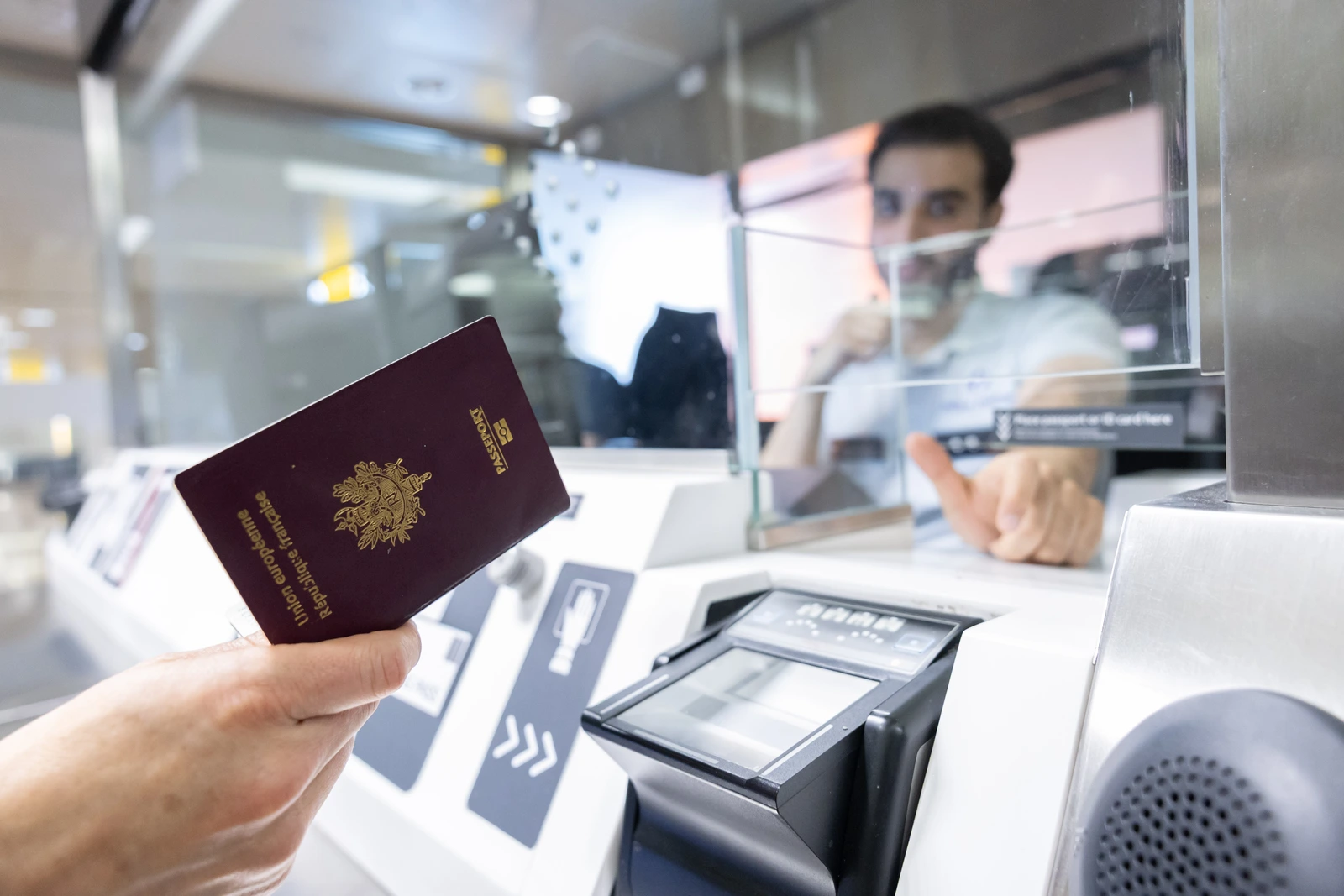
AJet is warning passengers about congestion at European airports as the EU’s Entry/Exit System (EES) changes border processing for many non-EU travellers. The timing matters for passengers flying between Türkiye and Europe: EES has been fully operational across Schengen external border crossing points since 10 April 2026, and aviation groups have reported significantly longer border-control queues at some airports during busy periods.
This does not mean every AJet flight will be delayed, or that a long passport-control queue automatically creates a right to flight compensation. It does mean passengers should understand where EES fits into the journey, allow extra time where appropriate and keep useful evidence if a wider disruption affects their flight.
What is AJet warning passengers about?
AJet has published a passenger announcement about congestion at European airports connected with newly implemented entry and exit systems. The warning is particularly relevant during the busy summer travel period, when additional border-processing time can combine with already high passenger volumes.
For AJet passengers, the practical issue is broader than whether the aircraft itself is running on time. A traveller may also need enough time to complete check-in, security and, where applicable, Schengen border formalities before reaching the gate.
If an AJet flight itself is delayed or cancelled, Airdelay’s AJet compensation claim guide explains the factors that can matter when assessing the disruption.
What is the EU Entry/Exit System (EES)?
The Entry/Exit System is the EU’s digital border system for many non-EU nationals making short stays in the Schengen area. It replaces manual passport stamping with electronic records of entries, exits and refusals of entry. Depending on the traveller and journey, the system records travel-document information, a facial image and fingerprints.
The European Commission says EES became fully operational across all Schengen countries on 10 April 2026, following a progressive rollout that began in October 2025.
By 27 July 2026, the Commission reported that the system had registered more than 145 million entries and exits. That scale helps explain why border-processing capacity has become an important operational issue during the summer travel peak.
Who does EES affect?
EES generally applies to non-EU nationals travelling to the Schengen area for a short stay. This makes it directly relevant to many passengers travelling from Türkiye to Schengen destinations.
It does not apply identically to everyone. EU nationals and nationals of Iceland, Liechtenstein, Norway and Switzerland are not registered in EES, and the EU lists additional categories that are exempt from EES registration.
Passengers should therefore check the official EU guidance for their own nationality, residence status and travel documents rather than assuming that everyone in the same airport queue has the same requirements.
Why are some European airports seeing longer border-control queues?
The aviation industry has repeatedly raised concerns about the operational effect of EES. In July, ACI EUROPE said border-control waiting times had increased significantly after the full rollout and could reach several hours at peak periods at affected airports. Earlier warnings from ACI EUROPE, Airlines for Europe and IATA identified staffing, technology and border-automation capacity as important pressure points.
The situation is not identical at every airport or at every time of day. Passengers should avoid treating a Europe-wide warning as proof that their particular airport will have a specific waiting time. The useful conclusion is simpler: where EES processing applies, border control can add an additional variable to an already busy airport journey.
Do EES or passport-control queues mean you can claim flight compensation?
Not automatically. A long queue at passport control and an airline-caused flight delay are not the same event. Flight-compensation eligibility depends on the legal framework covering the journey and the facts behind the actual flight disruption.
For flights covered by EU passenger-rights rules, questions such as the actual arrival delay and the cause of the disruption can be important. Airdelay’s EU261 compensation guide explains the current framework, while our arrival delay vs departure delay guide explains why the final arrival outcome can matter.
If a passenger simply reaches the gate too late because of a border-control queue, that should not be treated as automatically equivalent to an airline cancellation or qualifying delay. Conversely, if wider airport disruption affects the operation of the flight itself, the circumstances need to be assessed on their own facts.
What evidence should you keep if your journey is disrupted?
When airport congestion and a flight disruption overlap, separating the events can be useful. Keep your booking confirmation and boarding pass or digital travel documents, airline notifications, screenshots showing schedule changes, relevant airport or airline notices, receipts for reasonable additional expenses and evidence of any rerouting or rebooking.
If the flight is delayed, record when you actually reach your final destination. If it is cancelled, keep the airline’s explanation and the alternatives offered. Airdelay’s documents needed for a flight compensation claim guide provides a practical checklist.
What should AJet passengers travelling to Europe do now?
- Check AJet’s current travel notices before leaving for the airport.
- Confirm whether EES applies to you using official EU information.
- Allow extra airport time where advised, especially when your journey requires an external Schengen border check.
- Keep your travel documents accessible and follow airport instructions for EES processing.
- Monitor the flight itself separately from the border-control queue.
- Save evidence of any actual flight disruption, including airline messages and rebooking information.
- Check the applicable passenger-rights framework if your AJet flight is delayed or cancelled.
For passengers travelling between Türkiye and Europe, the key distinction is between border-processing congestion and a flight disruption. EES may affect how long part of the airport journey takes, while compensation rights depend on what happens to the flight and which rules cover the itinerary.
If your AJet flight was delayed or cancelled, you can use Airdelay’s AJet guide to understand what information matters before assessing a possible claim.
Official and industry sources
- AJet: Congestion at European Airport
- European Commission: Entry/Exit System fully operational, 10 April 2026
- European Commission: who is exempt from EES, 27 July 2026
- ACI EUROPE: EES operational impact, 1 July 2026
Last updated: 11 August 2026. This article provides general travel and passenger-rights information. Individual compensation eligibility depends on the journey and the circumstances of the disruption.